
Arena Breakout: Infinite Season 6 – Instructional Breakdown of the New Hybrid PvP Mode
The upcoming Season 6 update for Arena Breakout: Infinite introduces a significant structural shift in how players engage with combat, progression, and matchmaking. Alongside expanded PvE systems and experimental map layering, the standout addition is a new arena-style mode commonly referred to as “Supplies Drops.” This mode blends traditional team deathmatch pacing with extraction-inspired loot mechanics, creating a hybrid environment designed for fast PvP engagement without full gear risk, while also influencing how players approach progression and when they choose to buy Arena Breakout: Infinite Koens.
Understanding how this mode works—and how to approach it efficiently—is essential for maximizing both performance and in-game returns.
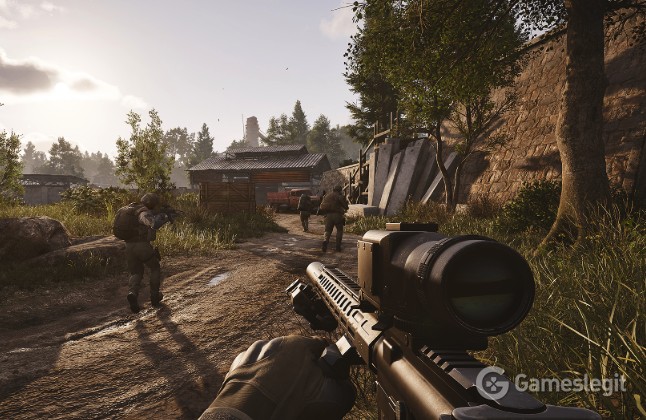
Core Structure of “Supplies Drops”
At its foundation, Supplies Drops operates as a multi-team arena shooter layered with extraction-lite mechanics. Matches typically take place on large-scale maps such as Airport, where multiple squads (often four or more teams) spawn simultaneously.
The primary objective is not simply eliminating opponents but accumulating the highest total match value, usually represented by in-match currency or loot extraction value. Matches are time-limited (approximately 10–12 minutes), encouraging aggressive engagement and constant rotation rather than passive survival.
Key Systems:
· Team-based PvP combat: Fast respawns or low punishment on death depending on test iteration.
· Loot collection during combat: Players can pick up valuables mid-fight.
· Dual extraction storage:
o Personal crate: Secure value that returns to the player.
o Team crate: Shared loot pool contributing to match score.
· Winning condition: Highest total extracted value at match end.
This creates a gameplay loop where survival alone is not enough—you must actively fight, loot, and secure drops.
Supply Drop Control: The Central Objective
One of the defining mechanics is the airdrop system, which spawns high-value crates across the map. These crates contain rare loot tiers, including gold-tier and potentially top-end items.
However, these drops function as high-conflict zones:
· Multiple teams converge simultaneously.
· Holding a drop requires coordinated defensive positioning.
· Losing the fight often means giving up significant score potential.
A practical approach is to treat supply drops as objective rotations rather than guaranteed engagements. If your team arrives late or without positional advantage, it is often more efficient to rotate and farm nearby squads instead of forcing a contested entry.
Combat Flow and Tactical Approach
Because Supplies Drops plays more like an arena shooter than an extraction raid, traditional survival-first tactics are less effective.
Recommended Tactical Principles:
1. Prioritize early engagements
Kills are consistently valuable due to loot conversion. Avoid overly defensive play.
2. Rotate aggressively
Map control matters more than static positioning. Move toward known hotspots and drop zones.
3. Value loot mid-fight
Unlike standard PvP modes, picking up high-value items during combat can directly influence match outcome.
4. Control respawn timing (if enabled)
If the mode includes respawns, timing your re-entry around squad fights can swing objective control.
Matchmaking and Population Considerations
Early testing has shown inconsistent matchmaking stability, with some sessions failing to populate entirely. This is likely due to:
· Low test server population
· End-of-season player drop-off
· Fragmentation between PvE, PvP, and experimental playlists
From a practical standpoint, this means players should expect variability in queue times and match availability, particularly during off-peak hours.
For optimal testing:
· Queue during peak regional hours
· Avoid repeatedly canceling searches
· Stick to one playlist to avoid further population splitting
Strategic Value for Players
Despite its experimental nature, Supplies Drops serves several important functions within the broader ecosystem:
1. Low-risk PvP training
You can engage in real player fights without fully committing high-value gear.
2. Economic practice loop
Loot collection under pressure teaches efficient decision-making under time constraints.
3. Warm-up environment
The mode functions effectively as a pre-raid training ground for sharpening aim, movement, and decision speed.
Integration with PvE and Core Extraction Systems
Season 6’s broader design introduces a layered structure:
· Core extraction mode: High-stakes economy and gear loss
· PvE hybrid content: Structured progression and learning environment
· Supplies Drops: Fast PvP + loot hybrid sandbox
This creates a three-tier learning and engagement system:
· Learn mechanics in PvE
· Practice fights in Supplies Drops
· Execute high-risk optimization in extraction raids
Final Strategic Outlook
Supplies Drops is not intended to replace extraction gameplay. Instead, it functions as a combat accelerator and confidence-building layer inside Arena Breakout: Infinite. If populated properly, it could become one of the most effective onboarding and warm-up systems in the game’s ecosystem. If population remains low, however, it risks becoming a niche or underutilized experiment. For now, the optimal approach is simple: treat it as a high-intensity PvP laboratory where every engagement has both combat and economic value, including opportunities to leverage cheap Arena Breakout: Infinite Koens.